A question Muslims ask more than they admit:
Can I meet this person before saying yes to marriage? Can we go for coffee? Can we talk — just the two of us — to see if there's compatibility?
And alongside this, a newer question emerging in Western Muslim communities:
What about these Muslim singles events — padel nights, social mixers, group outings organised specifically for Muslims to meet potential spouses? Is that okay?
These are honest questions. They deserve honest answers from the Quran and Sunnah — not just cultural opinions dressed in religious language.
First: Islam Does Allow You to Meet a Potential Spouse
Let's be clear from the start. Islam does not say: send your parents, exchange biodata, sign the nikah contract, and meet your spouse on your wedding night.
The Prophet ﷺ actively encouraged seeing and speaking with a potential spouse before committing. When Al-Mughirah ibn Shu'bah رضي الله عنه told the Prophet ﷺ he intended to marry a woman, the Prophet ﷺ said:
"Go and look at her, for that is more likely to create love between you." — Sunan An-Nasa'i, 3235 | Sunan Ibn Majah, 1866 | Sunan At-Tirmidhi, 1087
In another narration, Jabir ibn Abdullah رضي الله عنه reported:
"The Messenger of Allah ﷺ said: 'When one of you proposes to a woman, if he is able to look at what will encourage him to marry her, let him do so.'" — Sunan Abu Dawud, 2082 | Authenticated
The Prophet ﷺ didn't say: make your decision blind. He said: look, consider, then decide.
So the question is not whether you can meet. The question is how.
The Line Islam Draws: Khalwa
The clearest boundary in Islamic jurisprudence on this matter is khalwa — the prohibition on a man and woman being alone together in private.
The Prophet ﷺ said:
"No man should be alone with a woman (who is not his mahram)." — Sahih Bukhari, 5233 | Sahih Muslim, 1341
Khalwa is not about distrust. It is about protection — for both parties. Private seclusion creates conditions where emotions override judgment, where pressure can build, where boundaries erode gradually without either person fully realising it. The Prophet ﷺ closed that door as a mercy, not as a punishment.
This is the primary line. Everything else follows from it.
So Can They Meet — But Not Alone?
Yes. And scholars across madhabs generally agree on this.
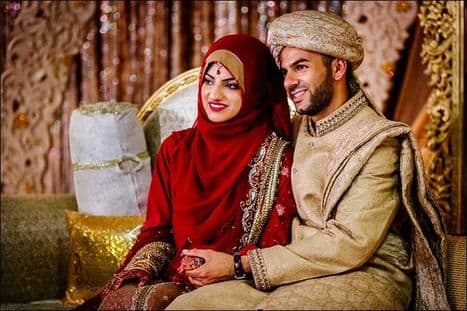
A meeting between a man and a woman considering marriage, in a setting where others are present — family members, a public café, a chaperoned environment — is permissible. The purpose is serious, the conduct is Islamic, and there is no private seclusion.
This is exactly what the Prophet ﷺ sanctioned. Looking at a potential spouse, speaking with them, assessing character and compatibility — all of this is allowed and even encouraged, provided the Islamic conditions are met:
- No khalwa — not alone in a private space
- Marriage intent — the interaction is purposeful, not recreational
- Islamic conduct — lowering the gaze, guarding speech, no flirtation or inappropriate conversation
- Wali awareness — the woman's guardian is informed and involved
A structured conversation in a public space, with both families aware, is not "dating" in the Western sense. It is ta'aruf — getting to know one another for the purpose of marriage. It is permitted.
Can They Go Out Together — Just the Two of Them?
This is where most people want a simple yes or no, and where the honest answer is: it depends on what "going out" means.
A public setting with people around — scholars differ.
Some scholars hold that as long as there is no khalwa (true private seclusion), meeting in a public space like a restaurant or park is permissible during the marriage consideration phase. The presence of the public acts as a social check on conduct.
Others are more cautious, preferring that a third party (family member or trusted friend) be present even in public settings during this stage.
An unsupervised private outing — not permissible.
If "going out together" means being alone in a car, visiting each other's homes without family, spending extended private time together — this is khalwa, regardless of what label is placed on it. "We're just getting to know each other" does not change what it is.
The honest test is not where you are — it's whether, if your parents or the community could see exactly what you were doing and saying, you would be comfortable. If the answer is no, the boundary has been crossed.
What About Muslim Singles Events?
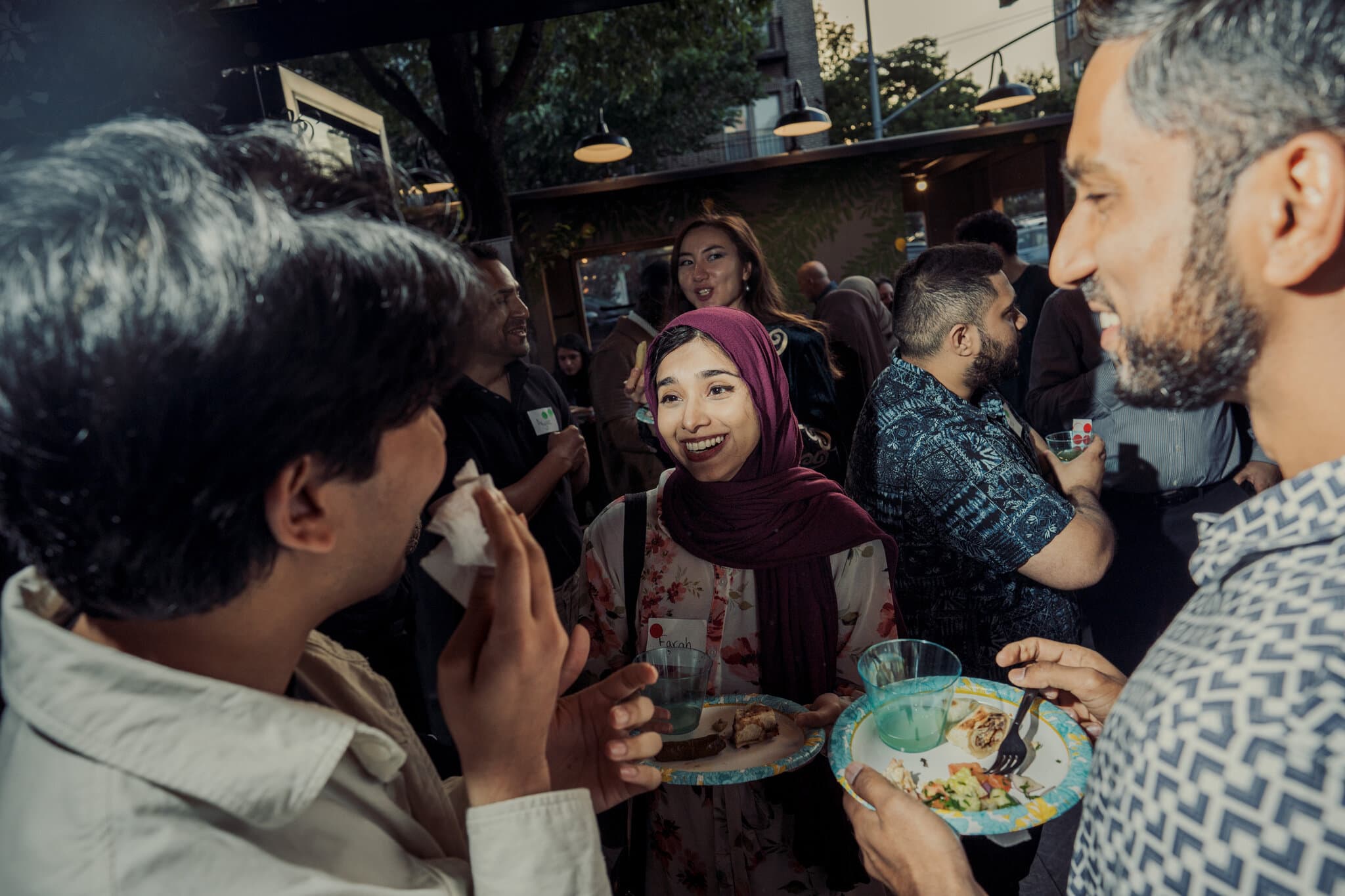
In recent years, a new trend has emerged — apps and organisations hosting events specifically for Muslim singles. Padel nights. Group dinners. Sporting events. Social mixers. All branded as halal spaces for Muslims to meet potential spouses.
The intention behind these events — addressing the real difficulty Muslims face in finding compatible spouses — is understandable. The problem is not the intention. The problem is the structure.
Here is what these events typically involve:
- Free mixing of non-mahram men and women in a social setting
- Casual conversation, laughter, and interaction with multiple members of the opposite sex simultaneously
- No formal marriage intent required to attend
- No wali or family involvement
- Social dynamics that mirror recreational mixed socialising, not structured marriage consideration
Islam does not prohibit Muslims from solving the real problem of finding a spouse. It prohibits the method when that method involves casual free mixing.
Allah addresses the wives of the Prophet ﷺ — and by extension, all believing women — with a principle that applies broadly:
"And abide in your houses and do not display yourselves as was the display of the former times of ignorance." — Surah Al-Ahzab, 33:33
And He commands both men and women:
"Tell the believing men to lower their gaze and guard their private parts... And tell the believing women to lower their gaze and guard their private parts." — Surah An-Nur, 24:30–31
Lowering the gaze. Guarding oneself. These are commands that become very difficult to fulfil at a social mixer where the entire purpose is to visually assess, charm, and be charmed by multiple strangers of the opposite sex.
The Difference Between Ta'aruf and Socialising
The key distinction Islamic scholars draw is between ta'aruf (purposeful getting-to-know for marriage) and free socialising (casual mixed interaction with no defined purpose or structure).
| | Ta'aruf (Permissible) | Free Mixing Events (Problematic) | |---|---|---| | Intent | Specific marriage consideration | General socialising | | Structure | Defined, purposeful, time-limited | Open-ended, recreational | | Wali involvement | Present or aware | Absent | | Number of people considered | One at a time | Multiple simultaneously | | Conduct | Formal, guarded | Casual, social | | Accountability | Family aware | Anonymous |
A Muslim who attends a "singles event" and chats casually with ten different people of the opposite sex over drinks and sport is not engaging in ta'aruf. They are engaging in the exact social dynamic that mainstream dating culture promotes — with an Islamic label attached.
The label does not change the substance.
Why This Matters More Than It Seems
When Muslims engage in casual free mixing under the banner of halal matrimony, several things happen:
First, the emotional and social dynamics of casual dating begin — interest, attraction, disappointment, attachment — all without the commitment or structure that Islam places around these emotions for good reason.
Second, the bar for serious intent lowers. When someone can casually meet fifty people at events without consequence, the weight of each interaction diminishes. Marriage becomes something to find while socialising, rather than something to actively and seriously seek.
Third, it creates a grey zone that erodes Islamic identity gradually. Today it's a padel game. Next month it's a weekend trip with the group. The path from Islamic ta'aruf to Western dating culture has very short steps.
The Real Solution
The problem that singles events are trying to solve is real: Muslims struggle to meet suitable, serious, compatible spouses — especially in diaspora communities, or for those who have outgrown traditional rishta networks.
But the solution cannot require abandoning Islamic boundaries to reach an Islamic goal.
Platforms that offer structured, intentional, wali-inclusive matrimonial matching — where you consider one person at a time, with purpose, within Islamic conduct — solve the real problem without creating a new one.
That is what Kufu is built to be.
Summary: What Islam Actually Permits
- ✅ Seeing and speaking with a potential spouse before agreeing to marriage
- ✅ Meeting in a public or family-supervised setting with marriage intent
- ✅ Asking questions about character, values, life goals, and deen
- ✅ Using a structured matrimonial platform to find and consider potential spouses
- ❌ Khalwa — being alone in private with a non-mahram
- ❌ Casual outings with no accountability, no wali awareness, no defined purpose
- ❌ Free-mixing social events where the dynamic is recreational rather than purposeful
- ❌ Treating marriage-seeking as an extended social hobby with no real intent
The question is never whether you want to find a good spouse. Every Muslim does. The question is whether you trust that Allah's boundaries, observed faithfully, lead to better outcomes than the alternatives.
Every evidence from the Quran, the Sunnah, and the lived experience of generations suggests they do.
"And of His signs is that He created for you from yourselves mates that you may find tranquillity in them; and He placed between you affection and mercy." — Surah Ar-Rum, 30:21
That tranquillity — sakinah — is what you are looking for. It is found inside the boundaries, not outside them.
Kufu is built for Muslims who are serious about marriage — structured, intentional, and within Islamic principles. Download the app.