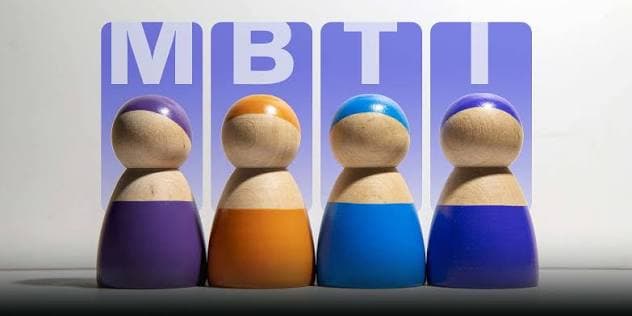
You've probably seen the letters before — INTJ, ENFP, ISFJ — scattered across social media bios, profile pages, and matchmaking conversations. But what do they actually mean? And more importantly, why does your personality type matter when you're looking for a spouse?
This is your complete guide to MBTI — what it is, how it shapes who you are, and how understanding it can transform your search for a halal match.
What Is MBTI?
The Myers-Briggs Type Indicator (MBTI) is one of the world's most widely used personality frameworks. It was developed by Isabel Briggs Myers and her mother Katharine Briggs, building on the psychological theories of Carl Jung.
The idea is simple: people experience the world differently based on four core dimensions of personality. Your combination across these four dimensions gives you one of 16 unique personality types.
It's not about boxing people in. It's about understanding how you think, what energises you, how you make decisions — and what kind of partner will bring out the best in you.
The 4 Dimensions Explained
1. Introversion (I) vs. Extraversion (E) — Where do you get your energy?
Extraverts recharge through people and social interaction. They think out loud, love conversation, and thrive in gatherings.
Introverts recharge through solitude and reflection. They process deeply before speaking and prefer meaningful one-on-ones over large gatherings.
In a marriage, this affects everything from how you spend weekends to how you handle conflict. An extravert craving social connection with an introvert who needs quiet can clash — unless both understand each other.
2. Sensing (S) vs. Intuition (N) — How do you take in information?
Sensors focus on facts, details, and what's real and present. They trust experience over theory and prefer practical, step-by-step approaches.
Intuitives focus on patterns, possibilities, and the big picture. They love abstract thinking, future planning, and "what could be."
This affects how you communicate. A Sensor spouse wants specifics: "What time are we leaving?" An Intuitive spouse thinks in themes: "I feel like we never prioritise each other."
3. Thinking (T) vs. Feeling (F) — How do you make decisions?
Thinkers prioritise logic, objectivity, and fairness. They separate emotion from analysis and value honesty over comfort.
Feelers prioritise harmony, empathy, and the emotional impact of decisions. They consider how something will make others feel before deciding.
This is one of the biggest compatibility factors in marriage. A Thinking spouse may come across as cold; a Feeling spouse may seem overly sensitive. Understanding this dynamic prevents countless misunderstandings.
4. Judging (J) vs. Perceiving (P) — How do you like to live?
Judgers prefer structure, planning, and closure. They like to decide early, stick to routines, and get things done ahead of time.
Perceivers prefer flexibility, spontaneity, and keeping options open. They adapt on the fly and find rigid schedules suffocating.
Imagine planning a wedding — or a household budget — with opposing styles here. Understanding this dimension builds patience and compromise.
The 16 Personality Types
The four dimensions combine into 16 types, often grouped into four temperaments:
The Analysts — Rational, Strategic, Independent
INTJ — The Architect Visionary, strategic, and fiercely independent. INTJs set high standards for themselves and their partners. They rarely open up — but when they commit, it's for life. Famous INTJs: Elon Musk, Michelle Obama, Friedrich Nietzsche
INTP — The Logician Deeply analytical and endlessly curious. INTPs love ideas more than routines and need a partner who respects their need for intellectual freedom. Famous INTPs: Albert Einstein, Bill Gates, Socrates
ENTJ — The Commander Natural leaders who are bold, decisive, and driven. ENTJs pursue excellence in everything — including marriage. They need a partner who can match their ambition. Famous ENTJs: Steve Jobs, Margaret Thatcher, Napoleon Bonaparte
ENTP — The Debater Quick-witted, creative, and intellectually provocative. ENTPs challenge every idea — including yours. They thrive with a partner who enjoys lively, honest debate. Famous ENTPs: Barack Obama, Mark Twain, Thomas Edison
The Diplomats — Empathetic, Idealistic, Purpose-Driven
INFJ — The Advocate Rare and deeply empathetic, INFJs are driven by a profound sense of purpose. They seek a soulmate connection — nothing superficial will satisfy them. Famous INFJs: Nelson Mandela, Oprah Winfrey, Mahatma Gandhi
INFP — The Mediator Gentle, imaginative, and deeply values-driven. INFPs seek authentic, meaningful love. They need a partner who honours their inner world. Famous INFPs: Princess Diana, J.R.R. Tolkien, Audrey Hepburn
ENFJ — The Protagonist Charismatic, warm, and naturally gifted at bringing out the best in others. ENFJs are devoted spouses who invest deeply in the relationship. Famous ENFJs: Martin Luther King Jr., Oprah Winfrey, Barack Obama
ENFP — The Campaigner Enthusiastic, creative, and endlessly optimistic. ENFPs fall in love with possibility — and with people who inspire them to grow. Famous ENFPs: Robin Williams, Anne Frank, Will Smith
The Sentinels — Reliable, Practical, Loyal
ISTJ — The Logistician Dependable, thorough, and fiercely loyal. ISTJs take commitment seriously. They show love through actions, not grand words. Famous ISTJs: Warren Buffett, Angela Merkel, Queen Elizabeth II
ISFJ — The Defender Warm, devoted, and quietly selfless. ISFJs are the backbone of the family — always there, always dependable, always caring. Famous ISFJs: Mother Teresa, Beyoncé, Kate Middleton
ESTJ — The Executive Organised, principled, and determined. ESTJs value tradition and responsibility. They create stable, structured family environments. Famous ESTJs: Michelle Obama (early career), Henry Ford, Frank Sinatra
ESFJ — The Consul Sociable, warm, and deeply caring. ESFJs put family first and are natural hosts, peacemakers, and nurturers. Famous ESFJs: Jennifer Lopez, Taylor Swift, Bill Clinton
The Explorers — Bold, Spontaneous, Adaptable
ISTP — The Virtuoso Calm, practical, and excellent under pressure. ISTPs show love through fixing problems and being reliably present — even if quietly so. Famous ISTPs: Clint Eastwood, Michael Jordan, Bruce Lee
ISFP — The Adventurer Artistic, gentle, and deeply authentic. ISFPs need freedom to express themselves and a partner who celebrates who they truly are. Famous ISFPs: Michael Jackson, Lana Del Rey, Princess Diana
ESTP — The Entrepreneur Energetic, bold, and action-oriented. ESTs live in the present and bring excitement to everything they do — including relationships. Famous ESTPs: Donald Trump, Madonna, Ernest Hemingway
ESFP — The Entertainer Fun-loving, spontaneous, and full of life. ESFPs make every moment memorable and need a partner who embraces joy and adventure. Famous ESFPs: Adele, Elvis Presley, Marilyn Monroe
How MBTI Affects Your Marriage
Understanding personality types isn't about finding someone identical to you — it's about understanding compatibility at a deeper level.
Communication styles clash when you don't understand each other's type. A Thinker delivering honest criticism to a Feeler can cause lasting hurt — not because they're wrong, but because how they said it was tone-deaf to their partner's emotional world.
Energy needs differ. An introvert married to an extravert needs both partners to consciously create space for what each needs — alone time and social connection.
Decision-making creates friction. A Judger and a Perceiver approach planning so differently that something as simple as booking a holiday can become an argument — unless both understand why the other operates the way they do.
The good news? Any two types can build a beautiful marriage with awareness, compassion, and communication. MBTI doesn't predict success — it provides a map.
What Islam Says About Compatibility
MBTI aligns beautifully with Islamic guidance on marriage. The Prophet ﷺ taught us to seek a partner with good character (akhlaq) and strong deen — and personality deeply shapes both.
A person's type influences:
- How they communicate and resolve conflict
- How they parent and build a home environment
- How they show and receive love
- How they handle stress, finances, and life's challenges
Knowing your type — and your potential partner's type — is a powerful tool for making an informed, thoughtful decision about who you choose to spend your life with.
Don't Know Your Type Yet?
Download Kufu and discover your MBTI personality type for free inside the app. Our matching algorithm uses your personality type as one of the core factors in finding you truly compatible, halal matches — not just faces on a screen.
Because finding your kufu means finding someone whose personality, values, and faith align with yours.
Your type is waiting to be discovered. So is your match.